redis-sentinel-gateway
Redis Sentinel Gateway 🚀
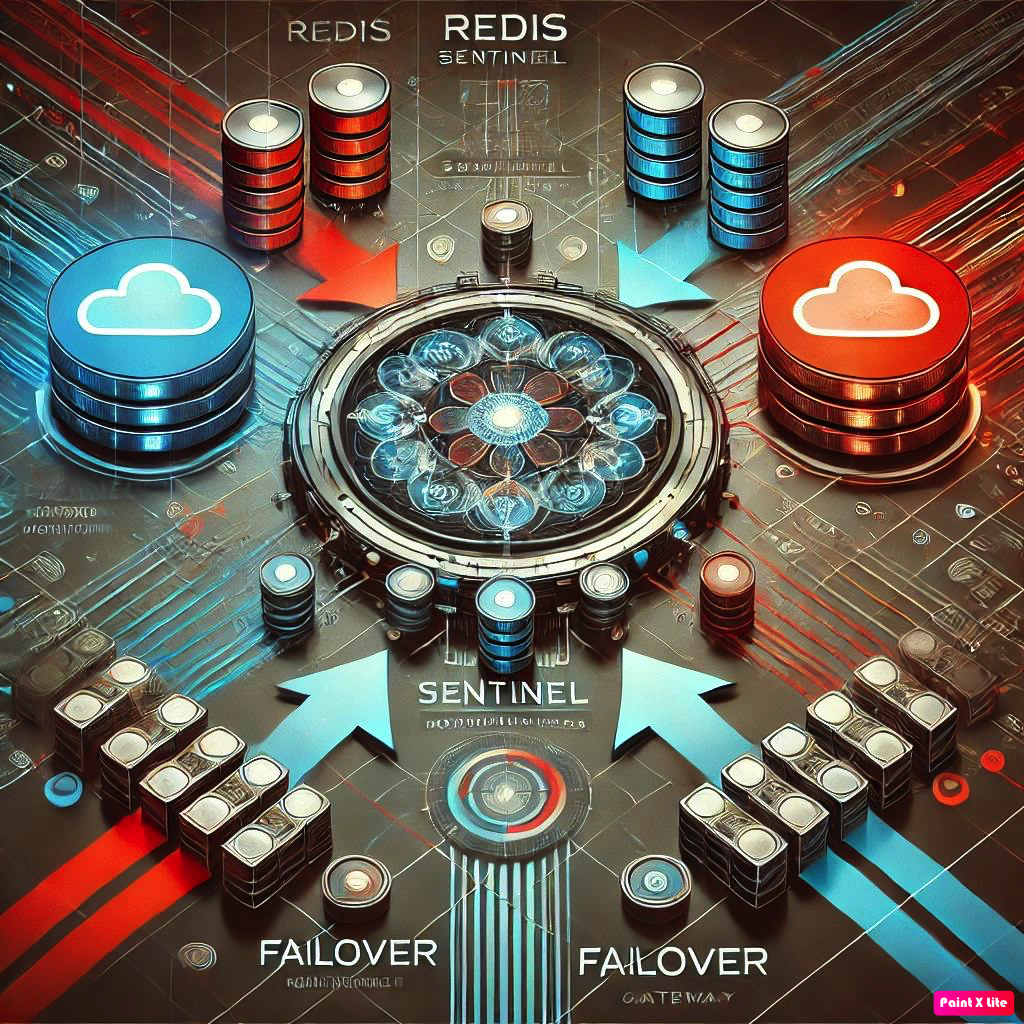
Redis Sentinel Gateway is a lightweight Go application designed to monitor Redis Sentinel for master node changes and automatically update Kubernetes Endpoints based on these changes. It simplifies the failover process by serving as a single point of entry for Redis, allowing clients to avoid dealing with Sentinel logic directly.



✨ Features
- Automatic Master Node Detection: Monitors Redis Sentinel for master node changes in real-time.
- Kubernetes Integration: Automatically updates Kubernetes Endpoints based on the detected changes.
- Leader Election: Ensures high availability using Kubernetes leases for leader election.
- Scalable: Configurable polling and tick intervals for optimized performance and responsiveness.
- Low Latency: Optimized for projects where low latency is critical for performance.
- Simple to Use: Single point of entry for Redis clients, avoiding the need to implement Sentinel logic in your applications.
🛠 Configuration
The application is fully configurable via environment variables:
| Environment Variable | Description | Default Value |
|---|---|---|
SERVICE_NAME |
Name of the Kubernetes service | redis-failover |
SENTINEL_ADDR |
Address of the Redis Sentinel | rfs-redis-node:26379 |
MASTER_NAME |
Name of the Redis master in Sentinel | mymaster |
NAMESPACE |
Kubernetes namespace (auto-detected if not set) | Auto-detected |
POLL_INTERVAL |
Interval between Kubernetes Endpoint updates | 10s |
TICK_INTERVAL |
Interval for checking master node changes | 1s |
LEASE_NAME |
Name of the Kubernetes lease for leader election | redis-failover-lease |
PORT_NAME |
Name of the port for the service | redis |
PORT_NUMBER |
Port number for the service | 6379 |
REDIS_PASSWORD |
Password for connecting to Redis Sentinel | None |
REDIS_PASSWORD_SECRET_NAME |
Secret name for Redis password | redis-sentinel-server |
REDIS_PASSWORD_KEY |
Key in the secret for Redis password | redis-password |
HOSTNAME |
Pod’s hostname, used as a unique identifier | Auto-detected |
⚡️ Why Redis Sentinel Gateway?
Redis Sentinel Gateway provides a unique solution for managing Redis failover scenarios. Unlike other approaches that rely on complex integrations or higher latency options, this project is built with low-latency performance in mind. The gateway continuously monitors Redis Sentinel and instantly updates the Kubernetes Endpoints to reflect the current master node, ensuring minimal delay during failover events.
This project is especially useful for legacy applications or older services where adding Sentinel support may not be possible. Many legacy systems either don’t have Sentinel support, or they rely on deprecated libraries that are difficult to maintain. With Redis Sentinel Gateway, there is no need to modify the application’s codebase to introduce Sentinel support, ensuring high availability without costly refactoring.
During load tests and high traffic scenarios, other approaches using Sentinel proxies showed significant latency spikes. Redis Sentinel Gateway is optimized to minimize these spikes, making it ideal for high-performance environments.
Perfect for:
- Real-time applications
- Financial systems
- Gaming servers
- High-performance microservices architectures
- Legacy applications that can’t easily integrate Sentinel support
⚙️ How It Works
- Monitoring: The gateway continuously monitors Redis Sentinel for changes in the master node status.
- Automatic Updates: When a master node change is detected, the Kubernetes Endpoints are automatically updated.
- Leader Election: Using Kubernetes leases, only one instance of the gateway is responsible for updating the Endpoints at any time, ensuring high availability.
- Polling & Tick Intervals: Configurable intervals control how frequently the application checks the Redis Sentinel and how often Kubernetes Endpoints are updated.
📦 Installation & Usage
Helm Chart
To install the Redis Sentinel Gateway via Helm, follow these steps:
-
Add the Helm repository:
helm repo add redis-gateway https://promzeus.github.io/redis-sentinel-gateway -
Install the chart:
helm install redis-sentinel-gateway redis-gateway/redis-sentinel-gateway --namespace redis --create-namespace -
Upgrade the chart:
If you need to update the application with new changes, simply run:
helm upgrade redis-sentinel-gateway redis-gateway/redis-sentinel-gateway --namespace redis -
Customizing the installation:
You can override the default values for the chart by passing your own values.yaml file. For example:
helm install redis-sentinel-gateway redis-gateway/redis-sentinel-gateway --namespace redis --create-namespace -f values.yaml
🔗 Links
🛡 License
This project is licensed under the MIT License.